
Our Value Promise to You
The objective is to evaluate the key stages of the MARS model through an HSE-focused case study, demonstrating its effectiveness in addressing operational challenges, adapting to diverse contexts, and supporting HSE professionals in building a sustainable, resilient business framework.
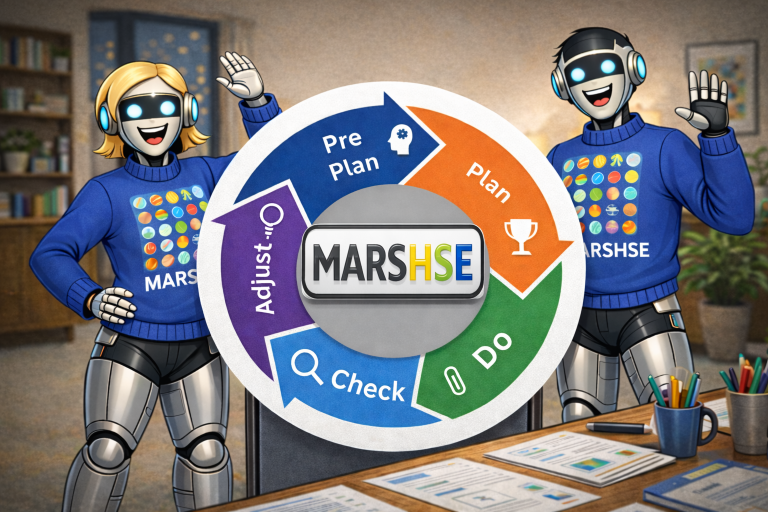
Value Chain
A sustainable HSE process uses continuous improvement—identifying risks, planning policies, implementing practices, monitoring performance, and making adjustments—to ensure long-term compliance, safety, and environmental sustainability.
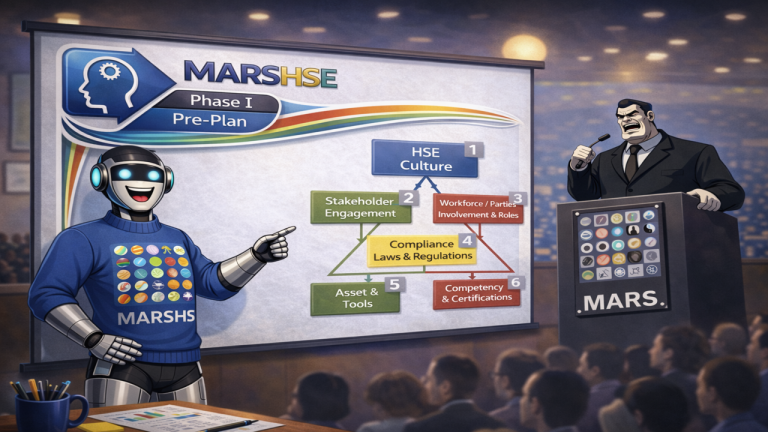
Pre-plan
The Pre-Plan phase builds the Management System’s foundation by fostering HSE culture, engaging stakeholders, defining roles, ensuring compliance, and identifying essential resources for effective, sustainable implementation.
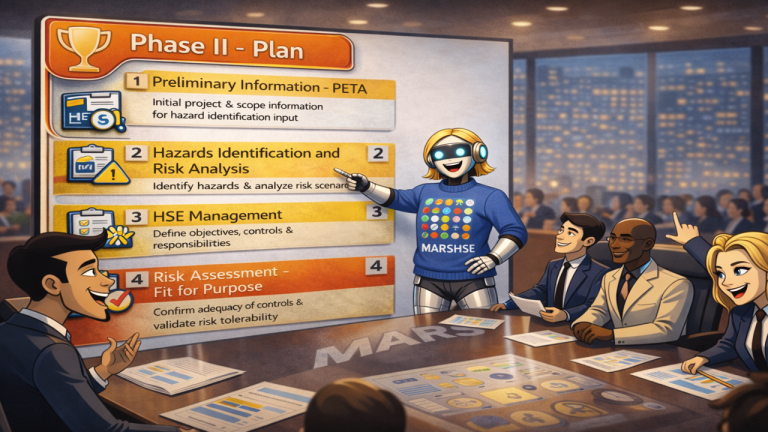
Plan
The Plan phase manages HSE risks by collecting data, identifying hazards, analyzing risks, validating assessments, developing the HSE Plan, and preparing the workforce through inductions before operations begin.
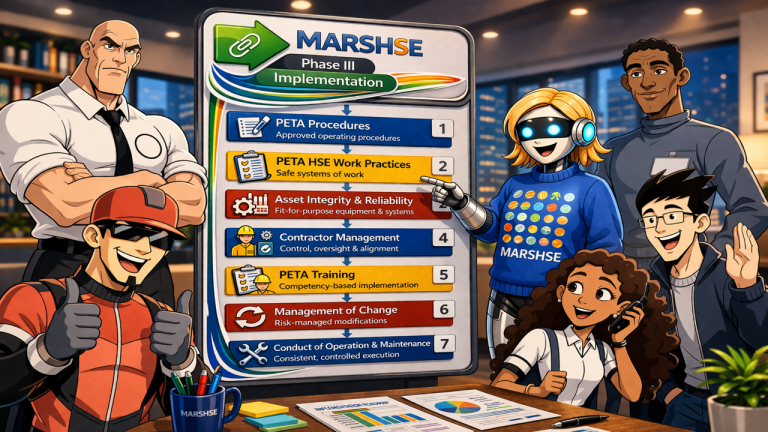
Implementation
The Implementation phase executes the Management System by applying PETA procedures, managing contractors, ensuring asset integrity, training personnel, controlling changes, and maintaining safe, reliable operations aligned with HSE requirements.
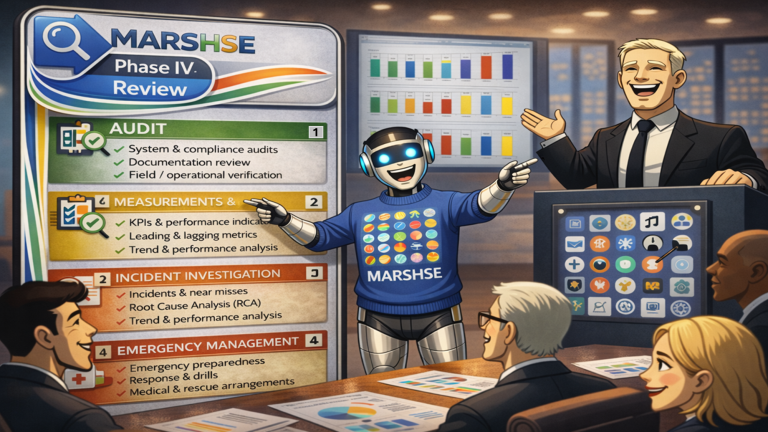
Review
The Review phase evaluates system performance via reviews, audits, investigations, and metrics to ensure compliance, identify gaps, verify effectiveness, and drive corrective actions and continuous improvement.
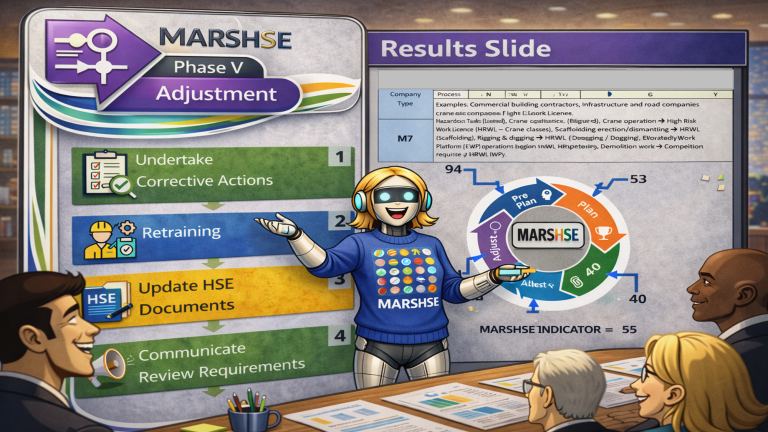
Adjustment
The Adjustment phase improves the Management System by applying corrective actions, retraining staff, updating HSE documents, and embedding lessons learned to close gaps and sustain continuous improvement.